
Why glaciers are extraordinary
A glacier is more than accumulated snow. It is ice formed over centuries that moves slowly, shapes valleys, creates lakes and records changes in climate. In the Cordillera Blanca, these ice forms coexist with high grasslands, queñual forests and diverse wildlife.
Water reserves
They release water that feeds lakes, rivers, agriculture and communities during dry periods.
Natural laboratories
Their ice helps scientists study climate, geology and changing mountain ecosystems.
Cultural heritage
The apus are part of Andean stories, beliefs, rituals and community identity.
Peaks that define the Cordillera Blanca
Huascarán · 6,768 m
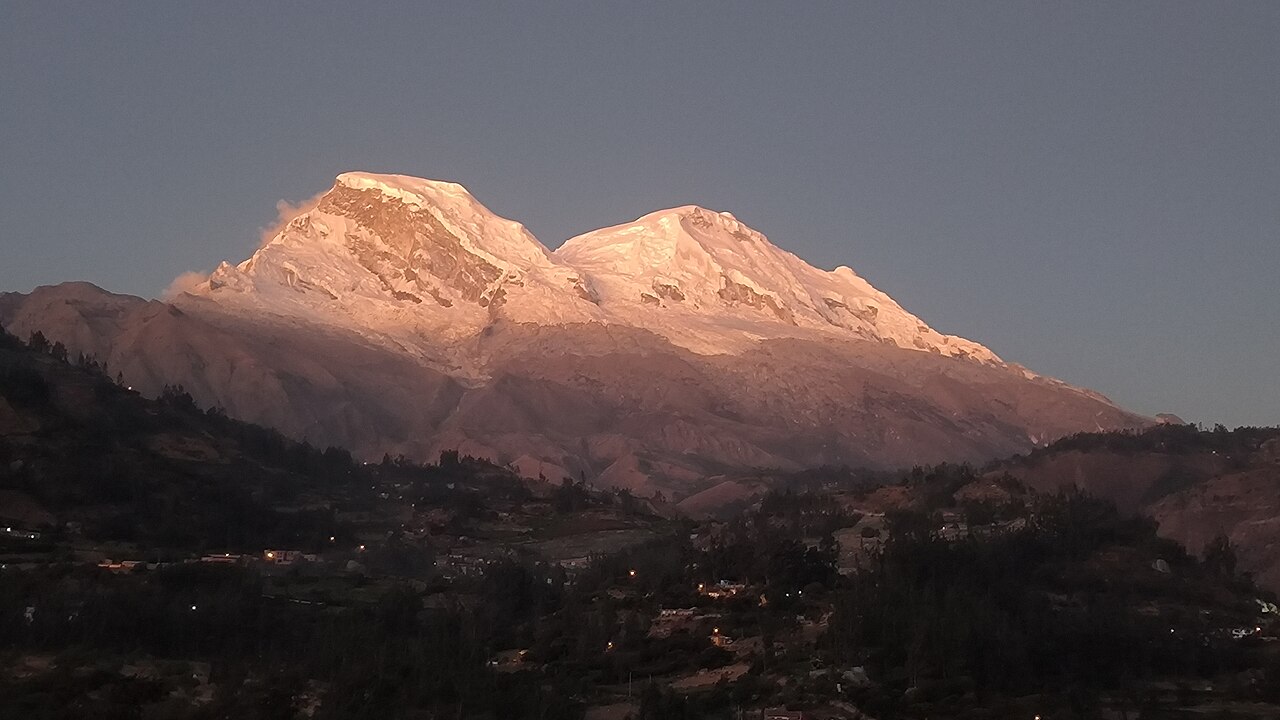
Peru’s highest mountain is the great visual landmark of the Callejón de Huaylas. Its north and south summits dominate the Yungay landscape and can be admired from valley viewpoints, the Llanganuco area and many routes without attempting the summit.
Alpamayo · the ice pyramid
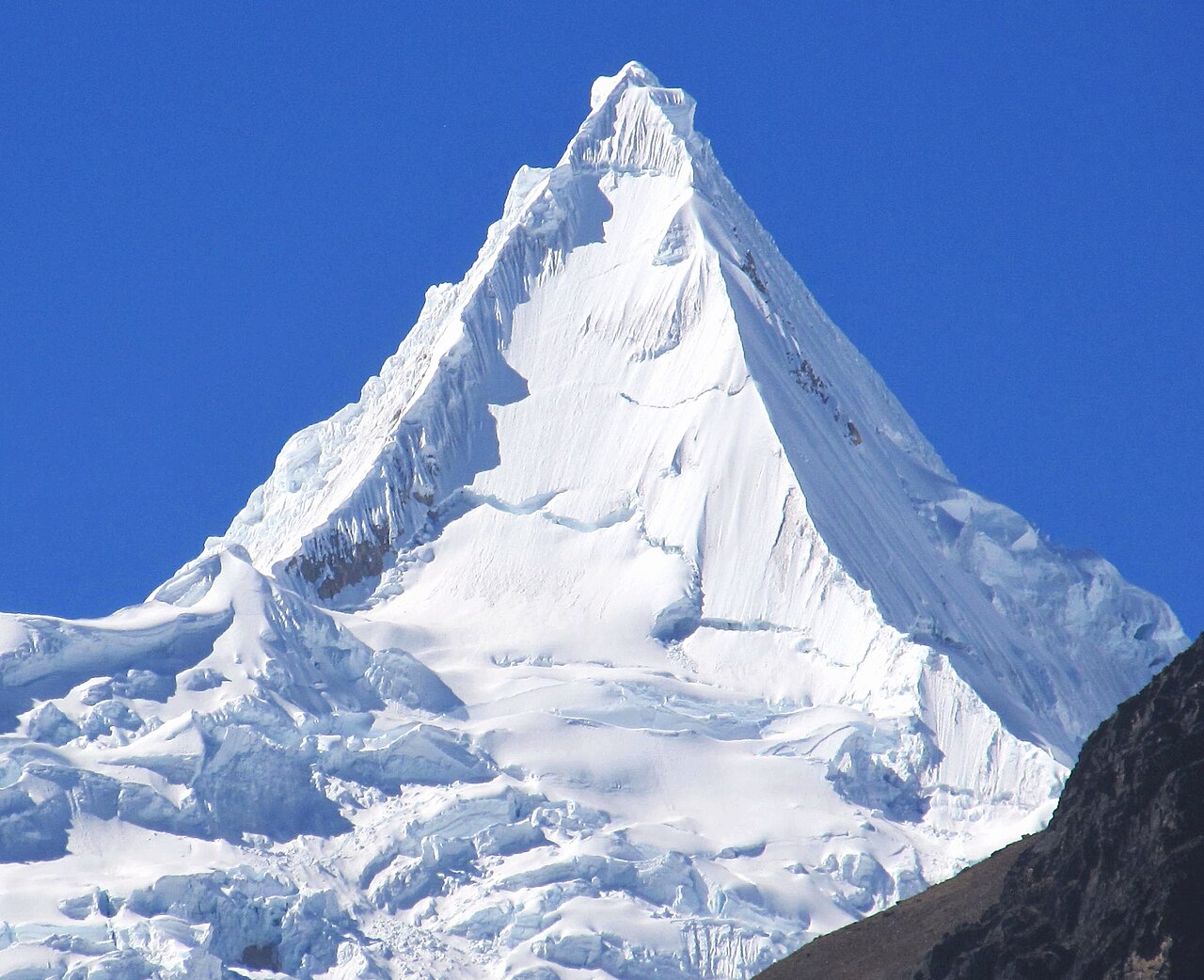
Its geometric profile is an icon of Peruvian mountaineering. It can be seen on multi-day routes such as Santa Cruz–Huaripampa and from northern sectors of the range. Climbing its face is a technical activity for experienced teams.
Artesonraju · a perfect silhouette
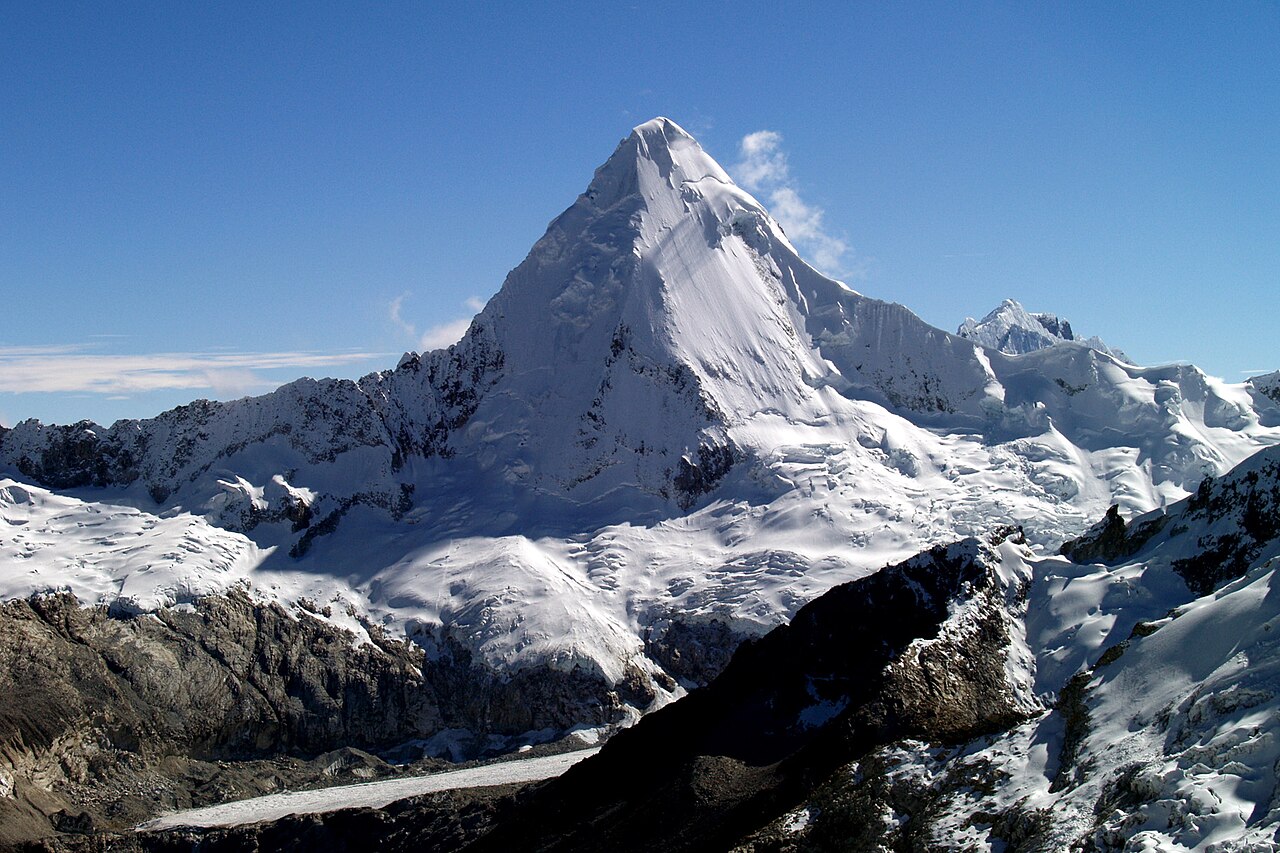
It rises above the Parón basin and appears in views from the Santa Cruz circuit. Its pyramid form, ridges and contrast with turquoise lakes make it one of Ancash’s great photographic subjects.
Huantsán · the Rajucolta horizon
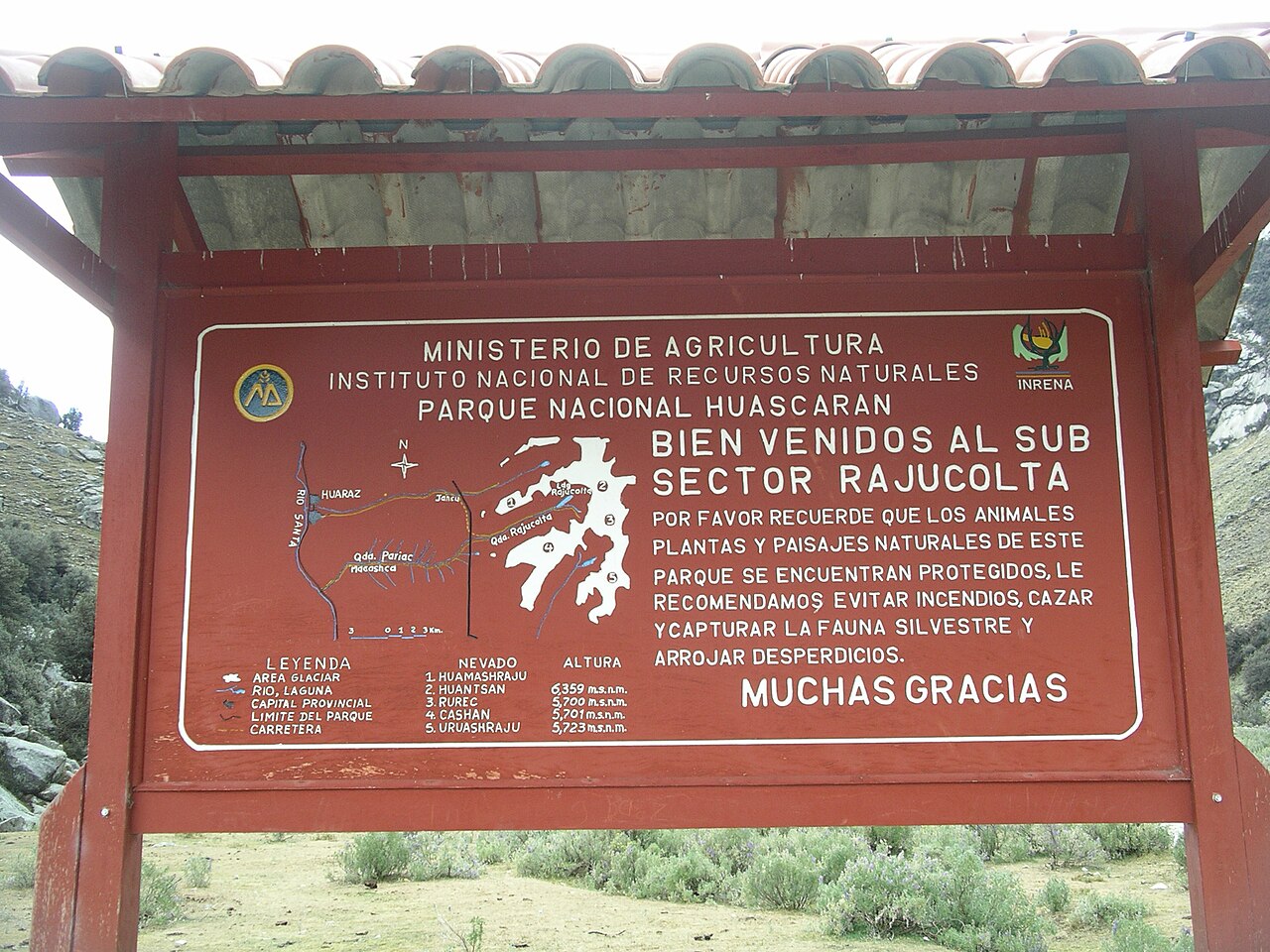
South of Huaraz, Huantsán closes the Rajucolta valley with a powerful glacial wall. The valley approach reveals mountain, lake and high-Andean scenery in a quieter setting than the classic circuits.
Ways to experience the glaciers
- ✓ Callejón de Huaylas viewpoints for Huascarán and Huandoy
- ✓ Glacial lakes such as Llanganuco, Parón and Laguna 69
- ✓ Pastoruri Climate Change Route
- ✓ Multi-day walks such as Santa Cruz–Huaripampa
- ✓ Landscape photography, plant and bird watching
- ✓ Climbs with authorized guides and operators
You do not need to climb to enjoy the range
There are experiences for different schedules and abilities: view the peaks from the valley, walk beside a lake or complete a trek. Choose an activity that matches your acclimatization and preparation; that is how the mountains are best enjoyed.
A responsible visit, briefly
Glaciers are beautiful and fragile. Use open routes, authorized operators where required, never step onto ice without training and equipment, pack out all waste and confirm weather, access and rules with SERNANP. For technical climbs, the guide’s assessment and same-day conditions always have the final word.