Why go
The Yungay Memorial preserves the memory of the old city and the people who lost their lives on 31 May 1970. Its circuit brings together historic remains, monuments, gardens, viewpoints and interpretation spaces. The visit is physically easy but emotionally significant, and should be approached calmly and respectfully.Gallery and visual history
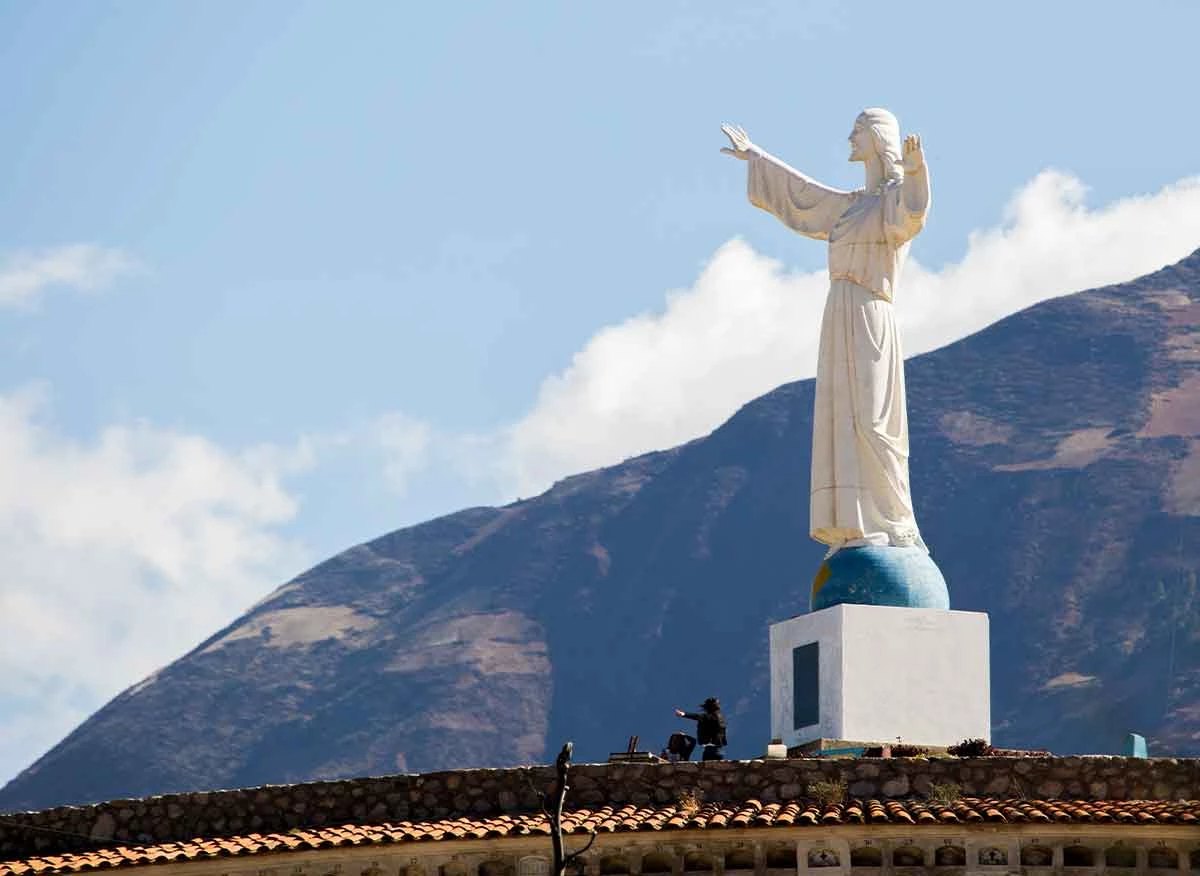
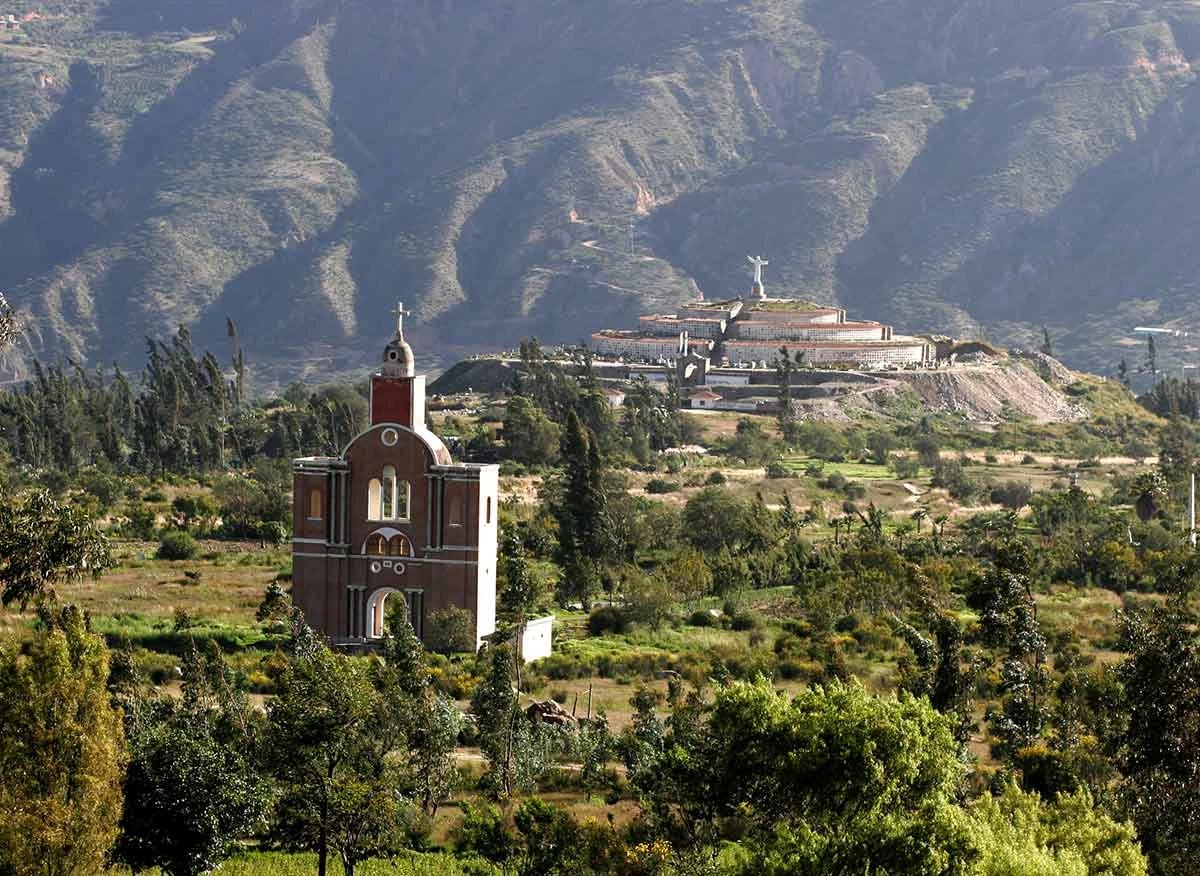
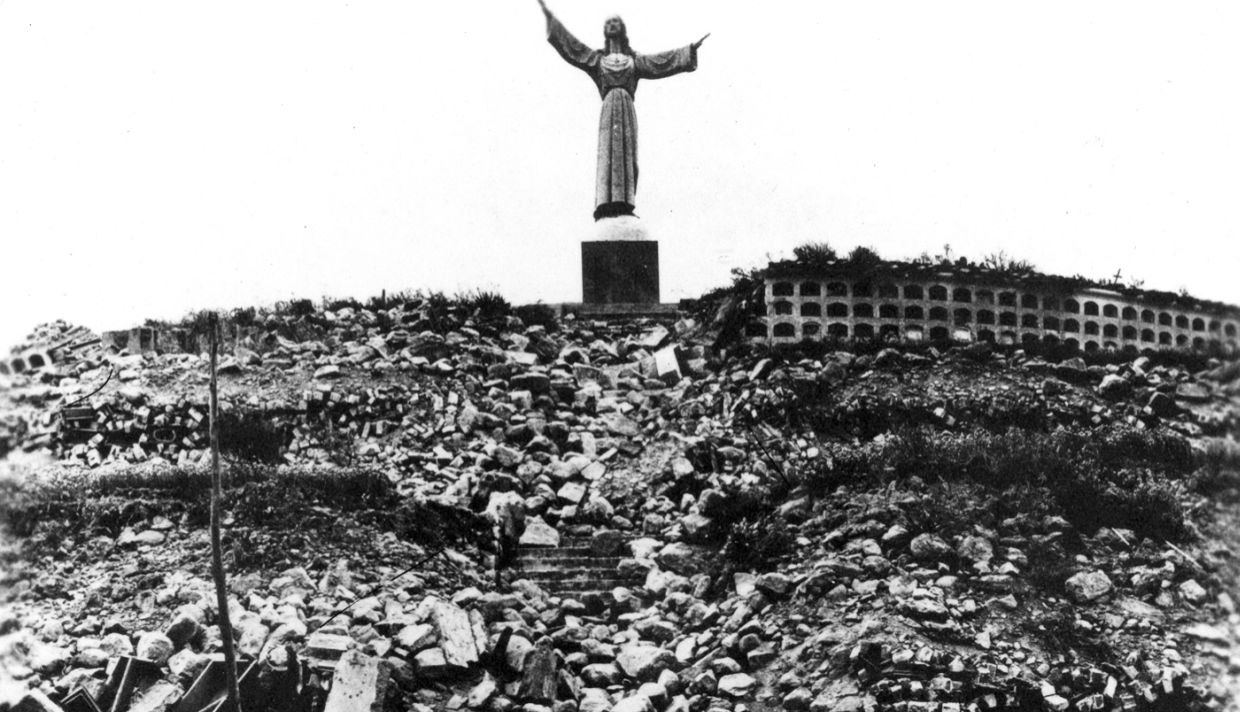
What to see
- Interpretation centre and historic circuit.
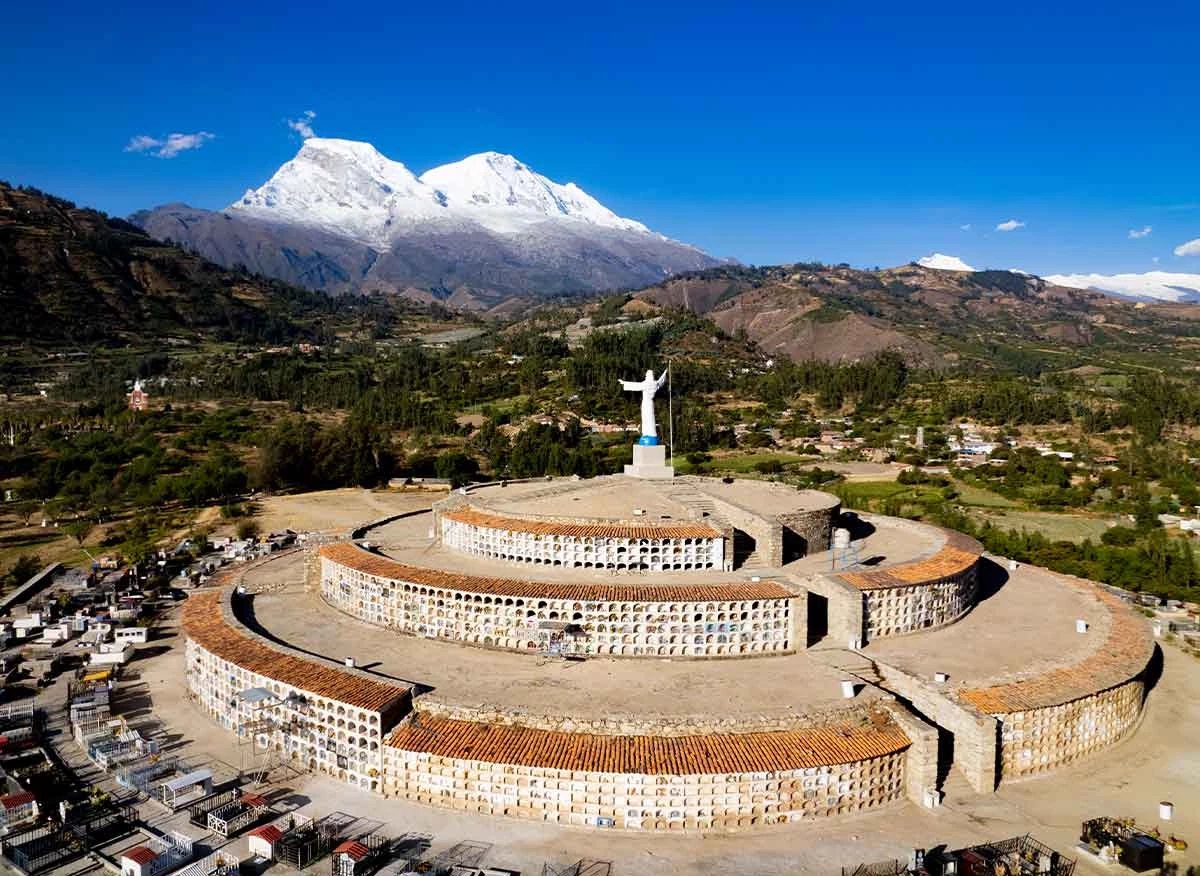
- Monumental Christ and terraced cemetery.
- Remains of the old church and buried city.
- Mausoleum and memorial to the victims.
- Views of Huascarán and the Yungay countryside.
A place of memory
This is not only a tourist attraction: it is a cemetery and a place of collective mourning. Read its history and remain respectful throughout the circuit.
Difficulty and access
The main circuit is easy and requires no special acclimatization. Parts of the cemetery have steps and changes in level; the interpretation centre, improved paths, toilets and parking make the visit practical.
History and significance
On Sunday 31 May 1970, a magnitude 7.9 earthquake triggered a massive release of ice and rock from Huascarán's north peak. The avalanche swept down the valley and buried Old Yungay, killing thousands of residents. The site was declared intangible and became a memorial cemetery.Surviving landmarks include remains of Santo Domingo church, vehicle fragments, a mausoleum to the victims and one palm from the old main square. Above the city, the terraced cemetery on Huansakuy hill remained, crowned by the Monumental Christ designed by local artisan Filomeno Melgarejo Malpica before the disaster. It now provides a broad view of Huascarán and the Yungay countryside.
Today the area is a place of memory, reflection and historical interpretation. Visitor facilities opened in 2024 include an interpretation centre, improved paths, a viewpoint, parking and toilets.
How to get there
The memorial is 1.55 km from Yungay Plaza de Armas, on the road toward Huaraz. It is about a 20-minute walk, around 3 minutes by mototaxi, or a short taxi or car ride. From Huaraz, travel first to Yungay along the Callejón de Huaylas road.Before you go
Allow one to two hours for the circuit and interpretation centre. Keep voices low, stay outside restricted areas and do not treat the remains as scenery. Visitors with reduced mobility may need help on steps and sloping sections.What to bring
Comfortable shoes, water, a hat, sunscreen and a light layer. Carry cash for admission and small purchases, and confirm the current price and opening hours.The best photograph
The viewpoint frames the Monumental Christ, Huascarán and the countryside. Treat the historical photograph as a record of memory and avoid disrespectful poses.Safety
Physical difficulty is low, but there are steps, slopes and uneven surfaces. Use sun protection, walk slowly and follow posted signs. In heavy rain, avoid slippery edges.Frequently asked questions
How difficult is the visit?
Easy. Allow one to two hours, with some steps and changes in level.
How much is admission?
The official inventory lists S/ 5 for adults and S/ 3 for children as a reference. Confirm the current price.
Can children visit?
Yes, with adult supervision and an explanation that this is a historic memorial and cemetery.
What time is best?
Morning often gives clear light and better views of Huascarán. Check the current schedule.
Sources and verification
Operational details can change. The following primary sources were consulted:
Inventario del Campo Santo de Yungay — MINCETURNueva infraestructura turística del Campo Santo de Yungay — MINCETURCampo Santo de Yungay — DIRCETUR Áncash